
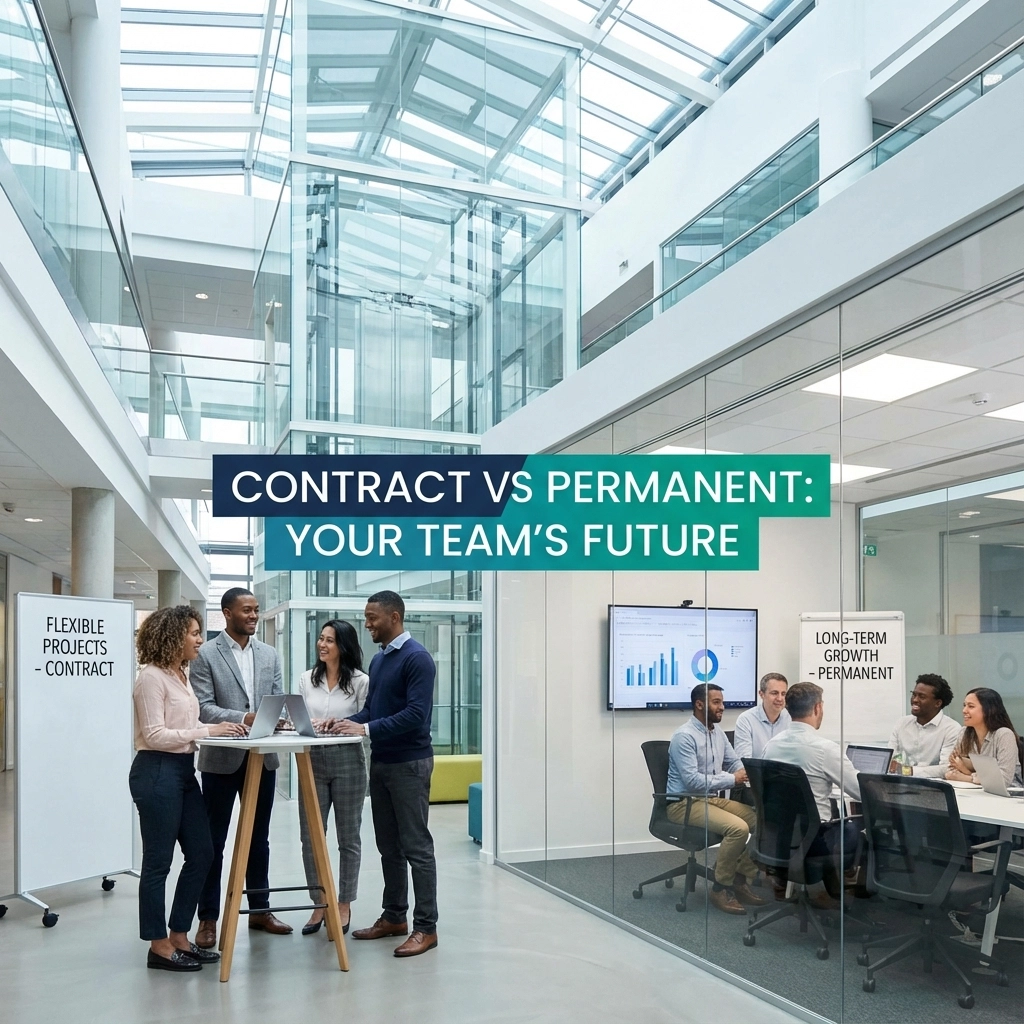
Engineering leaders face a critical decision that can make or break project success: should you hire contractors or permanent employees for your team? With 73% of successful engineering organizations now using a blended workforce strategy, the answer isn't as straightforward as it once seemed.
The choice between contract and permanent placements affects everything from project timelines and budget allocation to team culture and knowledge retention. While there's no universal solution, understanding when each approach delivers maximum value can transform your hiring strategy and drive better business outcomes.
Understanding the Fundamentals
Contract and permanent placements serve fundamentally different purposes in modern engineering organizations. Contract placements offer immediate access to specialized skills for defined periods, typically ranging from a few months to two years. These professionals bring deep expertise in specific technologies or methodologies, allowing teams to tackle complex projects without the long-term commitment of permanent hires.
Permanent placements, by contrast, represent an investment in your organization's future. These team members develop deep institutional knowledge, contribute to company culture, and provide the stability necessary for long-term strategic initiatives. They're the backbone of consistent project delivery and organizational growth.

The financial implications differ significantly between these approaches. While contractors command higher daily rates: often 20-40% more than equivalent permanent salaries: you only pay for project duration. Permanent employees carry ongoing salary and benefits obligations but represent lower immediate costs and greater long-term value for sustained work.
When Contract Placements Excel
Contract placements shine in scenarios requiring immediate expertise or flexible capacity management. If your engineering team faces tight project deadlines with specialized technology requirements, contractors can jump in without the typical onboarding period that permanent hires require.
Project-Based Scaling represents one of the strongest use cases for contract talent. When your organization experiences seasonal demand spikes or wins large, time-sensitive projects, contractors provide the additional bandwidth without permanent overhead costs. This approach allows you to scale your workforce up during peak periods and down during slower phases, maintaining financial efficiency.
Specialized Technical Skills often justify contract placements, especially for emerging technologies or niche expertise that your organization doesn't need permanently. Rather than training internal staff or hiring permanent employees for skills you'll use infrequently, contractors deliver immediate capability. This proves particularly valuable for cloud migrations, legacy system updates, or implementing new development frameworks.
Risk Mitigation becomes another compelling reason for contract placements when testing new roles or expanding into unfamiliar technical territories. You can evaluate both the role's necessity and the individual's fit before making permanent commitments.

However, contract placements come with distinct limitations. Knowledge transfer challenges arise when contractors complete projects and leave, potentially creating gaps in system understanding and maintenance capabilities. Additionally, contractors may lack the deep organizational context necessary for complex decision-making or long-term architectural planning.
When Permanent Placements Are the Answer
Permanent hires excel when building sustainable engineering capability and fostering organizational growth. These team members develop comprehensive understanding of your systems, processes, and business objectives, making them invaluable for complex, multi-phase projects requiring continuity.
Leadership Development represents a critical advantage of permanent placements. While contractors deliver specific expertise, permanent employees can grow into technical leadership roles, mentoring junior staff and driving architectural decisions. This internal capability development proves essential for organizations planning long-term growth and innovation.
Company Culture and Team Cohesion benefit significantly from permanent staff who become invested in organizational success. These team members adopt company values, participate in culture-building initiatives, and provide stability during periods of change. They're more likely to go above and beyond project requirements and contribute to team morale and collaboration.
Knowledge Retention becomes paramount for organizations managing complex, proprietary systems or maintaining legacy applications. Permanent employees accumulate institutional knowledge that proves invaluable for troubleshooting, system optimization, and future development planning. This knowledge continuity reduces risks associated with key person dependencies and system maintenance challenges.

Professional Development Investments make more sense with permanent employees who justify training costs through long-term value delivery. Certifications, conference attendance, and advanced training programs provide better ROI when employees remain with your organization for multiple years.
The Strategic Balance: Hybrid Workforce Models
Research indicates that 67% of high-performing engineering teams use hybrid workforce models, combining permanent core teams with contract specialists. This approach maximizes the advantages of both employment types while mitigating their respective limitations.
Core-Flex Model represents the most common hybrid approach. Organizations maintain a permanent core team handling ongoing development, system maintenance, and architectural decisions, while bringing in contractors for specific projects, capacity surges, or specialized expertise. This model provides stability while maintaining flexibility for changing business needs.
Seasonal Scaling works particularly well for organizations with predictable demand patterns. E-commerce companies, for example, might maintain permanent teams for core platform development while adding contract developers during peak shopping seasons or major feature launches.

Technology-Specific Augmentation allows organizations to access cutting-edge expertise without permanent commitments to emerging technologies. You might use contractors for artificial intelligence implementations, blockchain development, or specialized security assessments while your permanent team handles core application development.
Making the Right Choice for Your Team
Several factors should guide your contract versus permanent placement decisions. Project Pipeline Consistency serves as a primary consideration: if you have steady, long-term work requiring similar skills, permanent hires typically provide better value. Variable workloads with project-based demands favor contract arrangements.
Budget Considerations extend beyond immediate costs. While contractors require higher hourly rates, they eliminate benefits, payroll taxes, and long-term salary obligations. Permanent employees represent lower daily costs but require ongoing financial commitment regardless of work availability.
Technical Complexity influences the decision significantly. Highly complex systems requiring deep institutional knowledge favor permanent hires, while well-defined projects with clear specifications work well with contract talent.
Growth Trajectory matters for strategic planning. Organizations expecting rapid expansion might prefer permanent hires who can grow with the company and eventually lead larger teams. Companies with uncertain growth prospects might favor flexible contract arrangements.

Industry Regulations can also influence your decision. Some sectors require background checks, security clearances, or long-term accountability that favor permanent employees over contractors.
Optimizing Your Engineering Talent Strategy
The most successful organizations treat talent acquisition as a strategic capability rather than a reactive function. They maintain relationships with both permanent and contract talent pools, allowing quick access to appropriate expertise when opportunities arise.
Talent Pipeline Development involves building relationships with high-quality contractors who can quickly integrate into your projects while simultaneously developing permanent staff who understand your systems and culture. This dual approach provides maximum flexibility and capability.
Skills Gap Analysis helps determine which capabilities require permanent investment versus contract augmentation. Core competencies that drive competitive advantage typically warrant permanent hires, while supporting or specialized skills might be better served through contract relationships.
Whether you choose contract placements, permanent hires, or a hybrid approach, partnering with experienced engineering staffing professionals ensures access to top-tier talent when you need it. The right staffing strategy adapts to your organization's unique needs, project requirements, and growth objectives.
Ready to optimize your engineering team composition? Contact AList Professionals to discuss your specific requirements and develop a talent strategy that drives success in today's competitive market.