
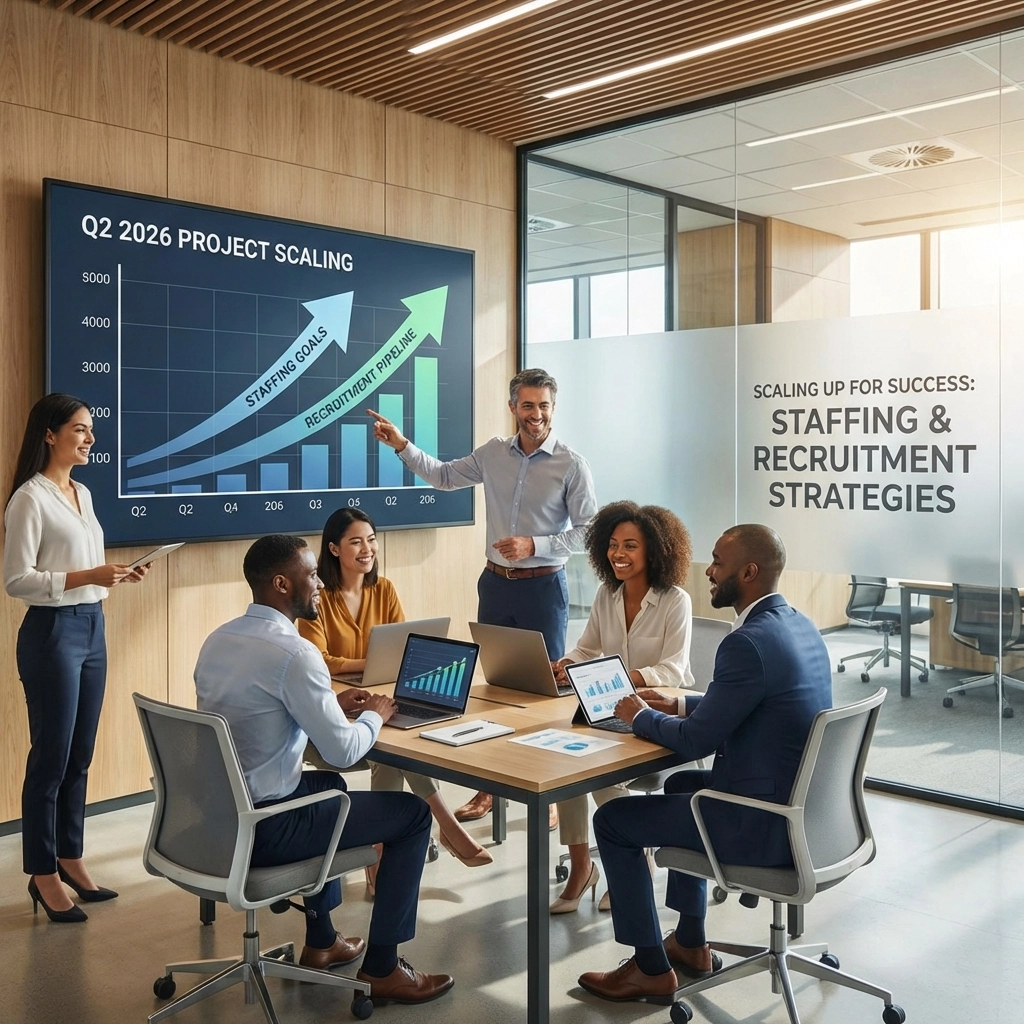
As we move deeper into 2026, business leaders across industries are preparing for an ambitious second quarter. Whether you're launching new product lines, expanding into new markets, or ramping up infrastructure projects, your success hinges on one critical factor: having the right people in place at the right time.
The economic landscape of 2026 presents both opportunities and challenges. Companies that master the art of strategic workforce scaling will outpace competitors, while those clinging to outdated hiring models risk falling behind. In this guide, we'll explore the staffing and recruitment strategies that will define Q2 2026 success: and how forward-thinking organizations can position themselves for growth.
The Economic Landscape: What's Driving Q2 2026 Demand
The second quarter of 2026 arrives amid a complex economic environment. While certain sectors are experiencing robust growth, persistent skills shortages and economic uncertainty continue to shape hiring decisions. For business leaders, this means adopting a more strategic, flexible approach to workforce planning.
Several key trends are influencing demand:
-
Specialized talent scarcity: Demand for highly specialized professionals in technology, engineering, finance, and healthcare continues to outpace supply. Companies are competing fiercely for candidates with niche expertise.
-
Project-based business models: Organizations are increasingly structuring work around specific initiatives rather than permanent departmental functions, driving demand for agile staffing solutions.
-
Economic caution: Despite growth opportunities, many companies remain cautious about permanent headcount expansion, preferring flexible arrangements that allow them to scale up: or down: as conditions evolve.
Understanding these dynamics is essential for any organization planning significant Q2 initiatives.

The Rise of Blended Staffing Models
One of the most significant shifts in 2026 workforce strategy is the widespread adoption of blended staffing models. Rather than relying exclusively on traditional direct hires, successful companies are building workforce flexibility through a strategic mix of employment arrangements.
Direct Hire for Strategic Leadership
Core leadership positions and roles central to long-term organizational strategy still warrant direct hire investments. These are the positions where cultural alignment, institutional knowledge, and long-term commitment deliver the greatest return.
Temp-to-Hire for Reduced Risk
Temp-to-hire arrangements have emerged as a powerful tool for reducing hiring risk. This approach allows organizations to evaluate a candidate's performance, technical capabilities, and cultural fit before making a permanent commitment. For competitive or high-turnover roles, temp-to-hire provides a reliable talent pipeline without the risk of costly mis-hires.
Contract and Temporary Staff for Flexibility
Contract and temporary staffing solutions offer maximum flexibility for peak periods, specialized projects, and niche skill requirements. When Q2 projects require expertise in emerging technologies or specialized domains, contract arrangements allow organizations to access top talent without long-term overhead commitments.
This blended approach enables companies to respond dynamically to demand fluctuations while maintaining operational stability.
Innovations in Contract and Project-Based Hiring
The contract staffing landscape has evolved significantly. Today's project-based hiring strategies incorporate innovations that benefit both employers and professionals:
Skills-based hiring has replaced credential-focused recruitment in many organizations. Rather than filtering candidates based solely on degrees or job titles, progressive companies are evaluating actual capabilities and transferable skills. This approach builds more diverse, adaptable teams capable of tackling complex Q2 initiatives.
Real-time talent marketplaces connect organizations with pre-vetted professionals who can deploy rapidly. Staffing partners with deep talent networks can deliver qualified candidates in days rather than weeks: a critical advantage when project timelines are tight.
Outcome-based engagement models align staffing solutions with business results rather than simply filling seats. This consultative approach ensures that hiring decisions support both immediate project needs and long-term organizational success.

How Economic Uncertainty Influences Staffing Demand
Economic uncertainty has fundamentally changed how organizations approach workforce planning. In previous decades, companies might have responded to growth opportunities with aggressive permanent hiring. Today, the calculus is more nuanced.
When economic conditions are unpredictable, organizations gain significant advantages from workforce flexibility:
-
Reduced fixed costs: Contract and temporary arrangements convert fixed labor costs into variable expenses that align with project revenue.
-
Faster pivoting: When market conditions shift, organizations with flexible workforces can reallocate resources without the disruption and expense of layoffs.
-
Access to specialized expertise: Rather than building permanent teams for every capability, companies can engage specialists for specific projects and release them when the work concludes.
-
Testing new initiatives: Uncertain conditions make pilot programs and experimental projects more attractive. Flexible staffing supports these initiatives without requiring permanent infrastructure.
For Q2 2026 planning, this means building scenario-based workforce strategies. What happens if demand spikes unexpectedly? What if a key initiative accelerates ahead of schedule? What if economic headwinds require scaling back? Organizations with answers to these questions will navigate uncertainty more successfully than those operating without contingency plans.
Actionable Strategies for Business Leaders
Successfully scaling your workforce for Q2 2026 projects requires deliberate planning and execution. Here are practical strategies to implement now:
1. Define Your Project Needs Early
Begin by clarifying which roles are mission-critical for your Q2 initiatives versus those that are strategic or support functions. Map out your project timeline, geographic requirements, and any seasonal demands specific to the second quarter. For each major project, determine the required roles, non-negotiable skills, and exact deployment timing.
2. Strengthen Your Hiring Infrastructure
Standardize your hiring practices to improve quality and speed:
- Develop clear, detailed job descriptions that help qualified candidates self-select
- Implement consistent interview frameworks and evaluation criteria
- Establish structured onboarding processes that reduce early turnover
- Maintain consistency in candidate assessment to minimize costly mismatches
3. Build Scenario Plans
Create at least three staffing scenarios:
- Growth scenario: If demand spikes, which roles and staffing partners can you ramp up quickly?
- Contraction scenario: If demand slows, where can you scale back without compromising core operations?
- Acceleration scenario: If a key initiative moves faster than expected, how will you secure specialized talent on short notice?
4. Partner Strategically
The right staffing partner provides advantages beyond candidate pipelines. Look for partners who offer real-time labor market insights, access to pre-vetted candidates, faster time-to-fill, and the ability to quickly adjust your workforce mix. Local expertise matters: partners who understand regional talent trends and industry nuances deliver better-matched candidates faster.

5. Prioritize Retention
Speed in hiring matters, but retention determines project success. Be transparent in job descriptions to attract candidates likely to stay long-term. Focus on cultural alignment: skills can be trained, but fit cannot. A structured onboarding process reinforces company culture and communicates growth opportunities, reducing turnover during project execution.
The AList Professionals Advantage
At AList Professionals, we understand that Q2 2026 success depends on more than simply filling open positions. Our approach combines deep industry expertise with flexible staffing solutions designed for today's dynamic business environment.
Specialized talent access: Our networks span information technology, engineering, finance, and accounting: the specialized domains where Q2 projects most often require reinforcement.
Flexible engagement models: Whether you need direct hire for strategic roles, temp-to-hire arrangements for risk reduction, or contract professionals for project-based work, we tailor solutions to your specific requirements.
Veteran talent pipeline: Through our veteran career opportunities program, we connect organizations with disciplined, skilled professionals transitioning from military service: a frequently overlooked talent pool with exceptional capabilities.
Consultative partnership: We don't just fill requisitions. We work with your leadership team to understand project goals, timeline constraints, and organizational culture, ensuring that every placement supports your broader business objectives.
Preparing for a Successful Q2
The second quarter of 2026 presents significant opportunities for organizations prepared to seize them. By adopting blended staffing models, embracing innovations in project-based hiring, and building scenario-based workforce plans, business leaders can position their companies for success regardless of economic conditions.
The companies that thrive in Q2 2026 will be those that treat workforce strategy as a competitive advantage rather than an administrative function. With the right planning, the right partners, and the right people, your organization can scale confidently into a successful second quarter and beyond.
Ready to discuss your Q2 staffing strategy? Contact AList Professionals to explore how we can support your growth initiatives.