
If you’ve spent any time in a C-suite meeting lately, you know the vibe. The conversation usually starts with growth projections and ends with a long, uneasy look at the latest trade bulletins.
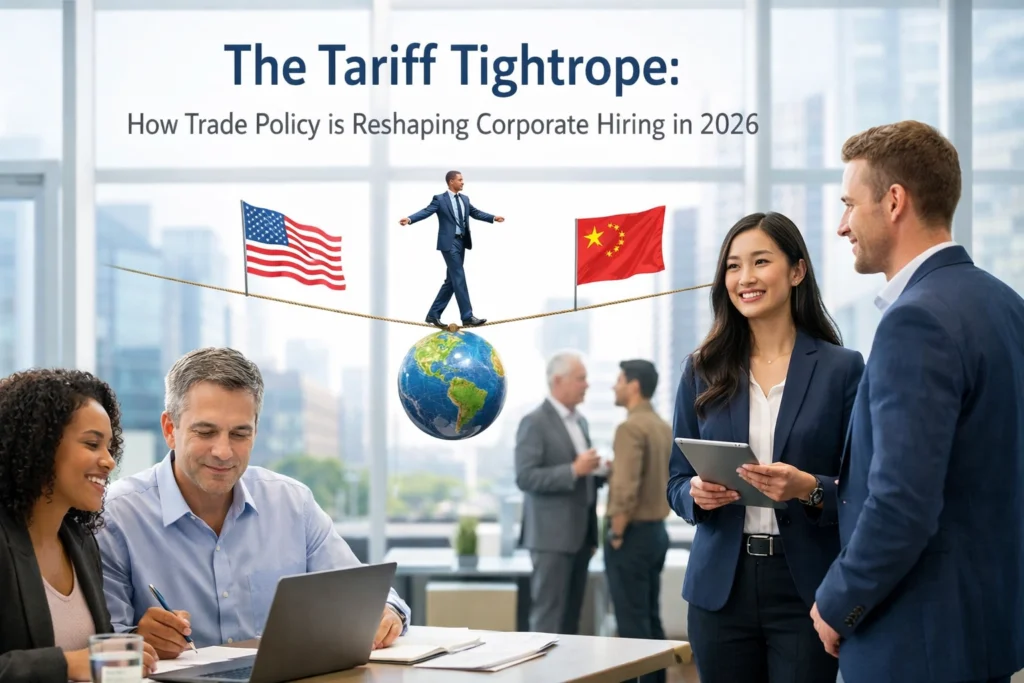
Welcome to February 2026. We’ve moved past the initial shock of the 2025 tariff implementations, but the ripples are now turning into waves that are crashing directly onto the desks of HR Directors across the country. Whether you’re managing an engineering team in the Midwest or a finance department in Manhattan, the "Tariff Tightrope" is the new reality of workforce planning.
At AList Professionals, we’re seeing it firsthand. Companies aren’t necessarily stopping their search for talent, but the way they hire is undergoing a massive transformation. Here is how trade policy is reshaping the corporate hiring landscape this year and what you can do to keep your talent pipeline from drying up.
The "Wait-and-See" Epidemic
The biggest challenge facing HR right now isn't a lack of candidates: it’s a lack of certainty.
According to the latest Federal Beige Book reports, policy uncertainty has become a primary constraint on business investment. For an HR Director, "policy uncertainty" is just a fancy way of saying your budget for new permanent headcount is currently stuck in a holding pattern.
We are seeing a widespread "wait-and-see" approach. Executives are hesitant to commit to long-term salary and benefit packages when they aren’t sure what their input costs will look like in six months. It’s a game of chicken: companies want to grow to meet demand, but they’re terrified of over-leveraging their payroll before the full impact of the 2026 trade adjustments is realized.

This hesitation is creating a bottleneck. Critical projects in IT and infrastructure are ready to launch, but the "green light" for full-time hires is flickering. This is where we see the most friction: department heads are screaming for help, but the CFO is clutching the checkbook until the next quarterly trade review.
Margin Pressure: The Invisible Hiring Freeze
It’s simple math, but it’s painful math. When tariffs drive up the cost of raw materials or imported components, that money has to come from somewhere. More often than not, it comes out of the "General and Administrative" (G&A) budget: which includes your hiring plan.
Margin pressure is forcing many firms to do more with less. We’ve seen instances where manufacturing firms have had to lay off portions of their workforce just to offset the increased cost of parts. However, the work doesn't go away. The remaining team members are stretched thin, leading to burnout and a plummeting "quit rate" because employees are too scared to leave their current "safe" harbor, even if they’re unhappy.
In 2025, we saw nearly 85% of employment gains happen before the heaviest tariffs were implemented in April. Since then, the market has tightened significantly. For HR Directors, this means the "Purple Squirrel" candidates: those rare, high-skill professionals: are even harder to find because they aren't looking to move in an unstable economy.
Sector Spotlight: IT, Engineering, and Finance
The impact of these trade policies isn't uniform. Depending on your industry, you might be feeling a slight breeze or a full-blown hurricane.
Information Technology (IT)
In the tech sector, the focus has shifted toward domestic infrastructure and AI. While tariffs have complicated the supply chain for hardware, the demand for IT professionals who can optimize existing systems is skyrocketing. Companies are looking for ways to use automation to offset rising labor and material costs. If you’re hiring in IT, you’re likely seeing a shift from "growth at all costs" to "efficiency at all costs."
Engineering
Engineering is perhaps the most volatile sector right now. On one hand, you have massive domestic investments: like Stellantis’ $13 billion push to increase U.S. output. This creates a vacuum for skilled engineers. On the other hand, smaller firms are struggling with the rising cost of construction and components, leading to localized hiring freezes. The result? A "talent war" in specific geographic hubs, while other regions see a cooling off.
Finance and Accounting
The finance and accounting sectors are currently the "Risk Management" hubs of the corporate world. Companies are hiring specialists who can navigate complex tax implications and supply chain logistics created by new trade barriers. However, these are often specialized, high-cost roles that require a different approach to sourcing than your standard staff accountant.

The Rise of the Flexible Workforce
So, how do you keep your company moving forward when you can’t get approval for a 50-person permanent expansion?
The answer for most successful HR Directors in 2026 has been flexibility.
We are seeing a massive shift toward contract and temporary staffing solutions. This "Elastic Workforce" allows companies to scale up immediately to handle the increased workload of reshoring or supply chain restructuring without the long-term liability of permanent overhead.
By utilizing staffing solutions from a partner like AList Professionals, businesses are finding they can:
- Bypass the "Wait-and-See" Paralysis: You can bring in a project-based engineering team today, even if the permanent budget isn't approved until Q4.
- Protect Margins: Contract labor can be scaled down if trade volatility increases, protecting the company from the "layoff-hire-layoff" cycle that damages employer branding.
- Access Niche Talent: Many top-tier professionals in IT and Finance are opting for high-end contract work in this economy, seeking the same flexibility that corporations are looking for.
AList Professionals: Your Partner in Volatility
At AList Professionals, we don't just fill seats; we provide a strategic buffer against economic uncertainty. We understand that as an HR Director, you are being asked to be a magician: finding top talent while keeping costs variable and risks low.
Our employer services are designed to give you that edge. Whether you need a temporary CFO to navigate a merger, a team of engineers for a six-month reshoring project, or IT specialists to overhaul your supply chain software, we have the network and the expertise to move quickly.

We take the "Partner Process" seriously. We don't just send over resumes; we consult with you on the current market rates, candidate sentiment, and the best way to structure your team for the 2026 landscape. We also take pride in our veteran career opportunities, helping companies tap into a highly skilled, disciplined talent pool that is often overlooked but perfectly suited for the rigorous demands of today’s market.
Looking Ahead: The Rest of 2026
The "Tariff Tightrope" isn't going away anytime soon. As we move further into the year, the companies that thrive will be those that embrace agility.
Don't let policy uncertainty dictate your company's growth. By shifting your mindset from "Permanent or Nothing" to a more flexible, hybrid staffing model, you can ensure that your departments have the talent they need to succeed: no matter what the next trade bulletin says.
If you’re ready to talk about how to navigate these hiring challenges, we’re here to help. From accounting to IT, we have the talent you need to bridge the gap.
Ready to build your elastic workforce? Contact us today and let’s get to work. Explore our open positions to see the caliber of talent we’re currently moving, or learn more about our client success stories.
The tightrope is a lot easier to walk when you have a partner holding the safety net.