
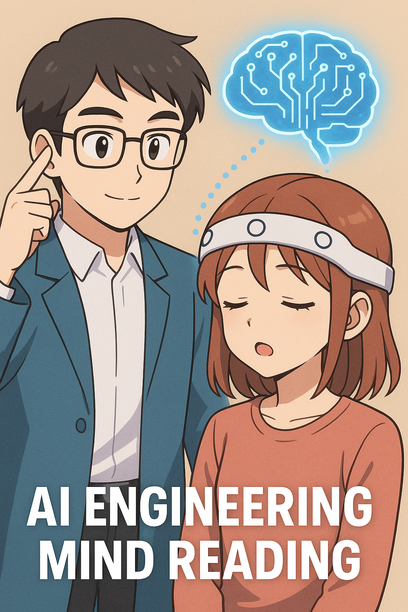
AI now predicts your engineering specialty from your interview face
A controversial truth is emerging in engineering hiring:
AI can determine whether you’re naturally wired for electrical, mechanical, controls, or reliability engineering—just from watching how you think.
Leading data center operators and manufacturing plants are quietly deploying “Discipline Prediction Systems” that analyze candidates’ micro-expressions, problem-solving patterns, and cognitive processing styles during technical interviews.
The results are unsettling.
This AI doesn’t just evaluate technical knowledge. It reads the subtle neurological signatures that indicate whether someone will thrive in systematic electrical troubleshooting versus intuitive mechanical problem-solving. Whether they’ll excel at logical controls programming versus pattern-based reliability analysis.
Early adopters report 91% accuracy in predicting long-term engineering success by discipline.
Here’s how it works:
During a standard 45-minute technical interview, computer vision algorithms track 47 micro-facial expressions, speech rhythm variations, and eye movement patterns. Machine learning models trained on 10,000+ successful engineers identify the subtle cognitive fingerprints that distinguish high-performing electrical engineers from mechanical specialists.
Electrical engineers show distinct patterns when processing systematic logic problems.
Mechanical engineers demonstrate unique spatial reasoning micro-expressions.
Controls specialists reveal specific attention patterns during automation discussions.
Reliability engineers exhibit characteristic analytical rhythms during failure analysis.
The technology promises massive efficiency gains for engineering-heavy operations.
One semiconductor facility reduced mis-hire rates by 73% while cutting discipline-specific training time by 8 weeks. A warehouse automation company eliminated $2.3M in engineering turnover costs by placing candidates in optimal specialties from day one.
Data centers are using it to build perfectly balanced engineering teams—ensuring electrical, mechanical, controls, and reliability strengths align with facility needs without guesswork.
But the ethical implications are staggering.
Candidates have no idea their career trajectory is being shaped by algorithms that read involuntary neurological responses. A brilliant engineer might be steered away from electrical specialization because their micro-expressions suggest mechanical aptitude—regardless of their actual interests or goals.
Worse yet: these systems may inadvertently discriminate against neurodivergent candidates whose cognitive processing patterns don’t match traditional engineering profiles, despite potentially superior technical abilities.
The technology raises fundamental questions:
Should candidates know when AI has analyzed their neurological patterns?
Who owns the cognitive data collected during interviews?
What happens when AI predictions contradict candidate preferences?
Does algorithmic discipline matching violate informed consent principles?
Some firms argue transparency would contaminate results. If candidates knew they were being analyzed for cognitive patterns, they might consciously alter their responses, defeating the system’s predictive accuracy.
Others worry about creating “engineering caste systems” where AI determines career paths based on biological predispositions rather than individual choice and determination.
The legal landscape remains murky.
While the EU’s AI Act classifies hiring AI as “high-risk,” discipline prediction systems operate in regulatory gray areas. US states implementing algorithmic bias laws focus on discrimination detection, not cognitive pattern analysis.
Meanwhile, competitive pressure drives adoption.
Engineering talent shortages make optimization irresistible. Organizations using discipline prediction gain decisive advantages in project success rates, team stability, and operational uptime.
The technology will likely expand regardless of ethical concerns.
As AI becomes more sophisticated, expect systems that predict not just optimal disciplines but specific subdisciplines, team roles, and leadership potential based on cognitive signatures.
For hiring leaders in engineering environments, the question isn’t whether this technology will reshape technical recruiting—it’s whether you’ll implement it transparently or let competitors gain advantages through hidden deployment.
The future of engineering careers may depend on algorithms that candidates never see.
That’s either the ultimate optimization breakthrough or the beginning of invisible career control.
What side of engineering AI ethics will your organization choose?