
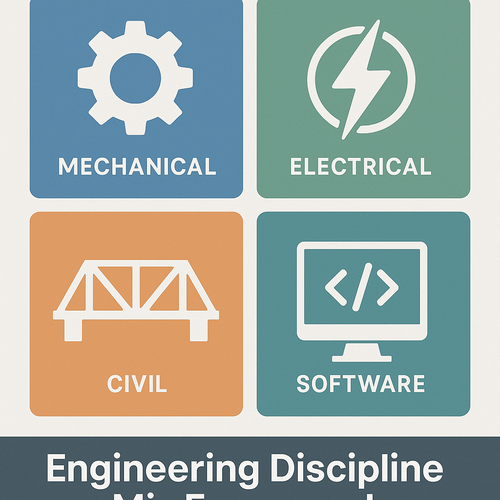
How wrong engineering ratios cost this data center $2.1M annually
A 12MW colocation facility in Texas looked balanced on paper.
18 engineers. Industry-standard headcount. Competitive salaries.
But downtime events were destroying their SLA performance.
Power fluctuations every month. HVAC failures during peak loads. Automation glitches that took hours to resolve. Emergency contractors billing $40K per incident.
Leadership kept asking: “Do we need more engineers?”
The real question was: “Do we have the right engineering mix?”
When they finally conducted a discipline audit, the problem became clear:
• 11 mechanical engineers (61% of team)
• 4 electrical engineers (22% of team)
• 2 controls engineers (11% of team)
• 1 reliability engineer (6% of team)
Their hiring strategy had focused on mechanical expertise because “data centers are basically giant HVAC systems.”
But modern facilities are electrical-first environments.
Power redundancy, UPS systems, generator coordination, and electrical distribution require deep electrical engineering expertise. Their 4-person electrical team was drowning.
Controls and automation were equally understaffed. With only 2 controls engineers managing hundreds of sensors, PLC systems, and building management integration, small configuration errors cascaded into facility-wide disruptions.
Reliability engineering—the discipline that prevents recurring problems—was essentially nonexistent.
After analyzing industry data and their specific failure patterns, they implemented the 4:3:2:1 Engineering Discipline Framework:
• 4 parts electrical engineering
• 3 parts mechanical engineering
• 2 parts controls engineering
• 1 part reliability engineering
For their 18-person team, this meant:
• 7 electrical engineers (power, distribution, backup systems)
• 5 mechanical engineers (HVAC, cooling, physical infrastructure)
• 4 controls engineers (automation, sensors, building management)
• 2 reliability engineers (preventive analysis, failure prevention)
They didn’t add headcount. They rebalanced disciplines.
The transformation took 6 months through strategic hiring and internal role transitions:
3 mechanical engineers cross-trained into controls roles. 1 mechanical engineer transitioned to reliability. 2 new electrical engineers joined the team. 1 experienced reliability engineer was recruited.
Results within 90 days:
• Power-related incidents: down 89%
• HVAC emergency calls: down 67%
• Average resolution time: down from 4.2 hours to 47 minutes
• Emergency contractor costs: eliminated completely
• Customer SLA violations: down 91%
Annual savings: $2.1M in emergency contractor costs alone.
Additional benefits: improved team expertise, better cross-discipline collaboration, proactive problem prevention instead of reactive firefighting.
This pattern repeats across industrial environments.
Manufacturing plants with automation-heavy processes often need more controls engineers than traditional mechanical focus suggests. Warehouses implementing robotics require electrical and controls expertise that pure logistics hiring doesn’t provide.
Data centers in particular follow predictable discipline requirements:
• Electrical engineering dominates because uptime depends on power reliability
• Mechanical engineering supports cooling and physical infrastructure
• Controls engineering manages automation and building systems
• Reliability engineering prevents recurring failures
The 4:3:2:1 ratio reflects these operational realities.
But most hiring managers focus on total engineering headcount instead of discipline balance. They ask “How many engineers do we need?” instead of “Which disciplines are we missing?”
This creates expensive blind spots.
If you’re an operations manager, HR leader, or staffing professional in engineering-heavy environments, conduct a discipline audit this quarter:
1. Map your top 5 operational risks to specific engineering disciplines
2. Compare your current staffing ratio against those risks
3. Identify discipline gaps that create recurring problems
4. Rebalance through strategic hiring and internal development
Focus on competency alignment, not just credential counting.
Engineering isn’t generic. Neither should your workforce strategy be.
The right discipline mix eliminates emergencies before they happen.