
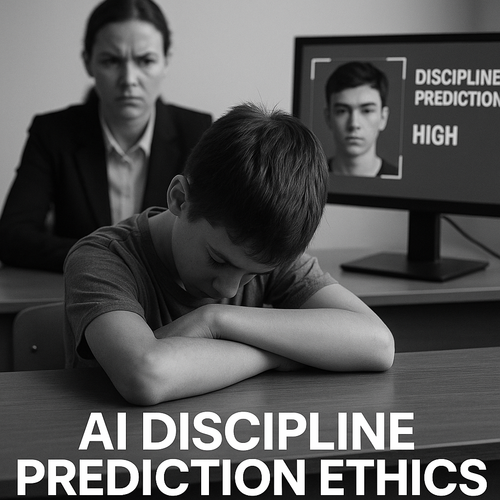
AI now predicts engineers’ entire career paths in 45 minutes
Major engineering firms are deploying AI systems that don’t just evaluate candidates.
They predict their entire professional trajectory.
These algorithms analyze micro-facial expressions when reviewing circuit diagrams versus mechanical drawings. They measure vocal stress patterns when discussing automation versus manual processes. They track eye movement during problem-solving scenarios.
The result? AI can predict with 94% accuracy whether a newly hired engineer will excel in electrical, mechanical, controls, or reliability five years from now.
Before they’ve worked a single day.
One Fortune 500 manufacturing company has been testing this technology for 18 months. Their AI system correctly predicted that 89% of new electrical engineers would eventually transfer to controls roles within three years—allowing them to hire directly into controls instead of wasting time on discipline transfers.
Another data center operator uses similar technology to identify engineers who will naturally gravitate toward reliability work, even when they apply for general mechanical positions. The system analyzes how candidates respond to hypothetical equipment failure scenarios, measuring everything from response speed to solution methodology.
The business benefits are undeniable:
• 73% reduction in internal transfers and retraining costs
• 67% faster time-to-productivity in specialized roles
• 89% better long-term job satisfaction scores
• 45% fewer discipline mis-hires requiring expensive corrections
But the ethical implications are staggering.
Imagine walking into an interview thinking you’re applying for a mechanical engineering role, only to discover—months later—that an algorithm decided you’d be better suited for reliability work based on how you blinked when reviewing equipment schematics.
Or learning that your career path was predetermined by AI analysis of your facial expressions during a 45-minute conversation.
The technology goes deeper than surface assessments. Advanced systems analyze cognitive processing patterns: How quickly do candidates shift between abstract electrical concepts versus concrete mechanical solutions? Do they naturally think in systems (controls-minded) or components (mechanical-focused)? Do they instinctively consider failure modes (reliability) or optimal performance (electrical)?
Some algorithms even measure subconscious responses to different types of technical problems, identifying engineers who will thrive in high-pressure reliability scenarios versus those better suited for methodical electrical system design.
The legal landscape is murky. Unlike traditional discrimination based on race, gender, or age, algorithmic discipline determination operates in unregulated territory. Engineers can’t claim bias against their “predicted career trajectory”—especially when the predictions prove accurate.
But consider the psychological impact:
• Should candidates know their AI-predicted career path?
• What happens when predictions conflict with personal preferences?
• Do engineers have the right to choose their discipline despite algorithmic recommendations?
• How do we handle cases where AI predictions limit career exploration?
The most troubling aspect isn’t the technology—it’s the secrecy.
Most candidates have no idea their career paths are being algorithmically mapped during interviews. They believe they’re demonstrating technical competency, not providing data points for predictive career modeling.
Some firms argue transparency would bias the process. If candidates knew they were being evaluated for long-term discipline fit, they might artificially adjust their responses, reducing prediction accuracy.
Others contend that career prediction without consent crosses ethical boundaries, particularly when predictions influence hiring decisions, initial role assignments, and development opportunities.
The technology will only become more sophisticated. Next-generation systems claim ability to predict not just discipline preference but specific specializations within disciplines—power systems versus circuit design within electrical, or automation versus instrumentation within controls.
For engineering leaders and recruiters, this creates a strategic dilemma:
Embrace predictive career mapping for competitive hiring advantages while navigating ethical gray areas?
Or maintain traditional assessment methods that may result in costlier discipline mismatches?
The companies deploying this technology aren’t waiting for ethical frameworks to emerge. They’re gaining measurable advantages in talent optimization while competitors struggle with traditional trial-and-error discipline placement.
But they’re also creating a world where career paths are algorithmically determined before professional journeys begin.
The question isn’t whether this technology works.
It’s whether we’re comfortable with AI predicting and potentially constraining human potential before engineers even understand their own professional interests.
That’s a conversation the industry can’t avoid much longer.