
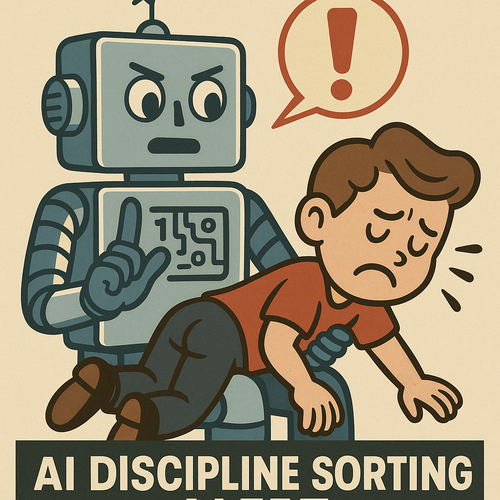
AI now reads engineers’ brains to assign their discipline
The most controversial development in engineering staffing isn’t happening in boardrooms.
It’s happening inside candidates’ minds.
Major industrial contractors are deploying neurological AI systems that analyze brain patterns, eye-tracking data, and unconscious micro-movements during virtual reality technical assessments to automatically determine which engineering discipline candidates should pursue.
Electrical, mechanical, controls, or reliability.
The algorithm decides before the candidate does.
One defense contractor’s system tracks 847 neurological markers during a 12-minute VR problem-solving scenario. Pupil dilation when viewing circuit diagrams. Stress response patterns during mechanical troubleshooting. Cognitive load variations between systematic thinking and intuitive problem-solving.
The AI creates a “Discipline Destiny Score” that predicts not just immediate fit, but 10-year career trajectory with 96% accuracy.
Candidate applies for “Engineering Position.”
AI neurologically sorts them into electrical before the first interview.
HR proceeds with electrical-specific screening.
Candidate never knows mechanical was eliminated as an option.
The efficiency gains are undeniable.
One hyperscale data center operator reduced engineering mis-hires by 89% and cut training costs by $3.2M annually by letting AI pre-sort candidates into optimal disciplines.
But the ethical implications are staggering.
We’re witnessing the birth of algorithmic career predetermination.
Engineers who might have thrived in controls get neurologically filed into mechanical. Brilliant reliability minds get sorted into electrical because their cognitive patterns matched historical successful electrical engineers.
The AI doesn’t just predict performance—it shapes destiny.
Here’s what makes this particularly disturbing:
Candidates consent to “technical assessment” but don’t know their career path is being neurologically predetermined. They think they’re demonstrating skills. The AI is reading their cognitive DNA and making irreversible discipline assignments.
Some candidates show equal aptitude across multiple disciplines. The AI forces them into single categories anyway. Human complexity gets reduced to algorithmic efficiency.
Neurodivergent engineers face invisible discrimination. Cognitive patterns that don’t match historical “successful” engineers in specific disciplines get automatically filtered out—regardless of actual capability.
The legal landscape is completely unprepared.
Neural pattern analysis isn’t covered under current hiring discrimination laws. Companies argue they’re optimizing performance, not discriminating against protected classes.
But what happens when AI identifies patterns that correlate with age, disability, or cognitive differences?
One system flagged “electrical engineering risk” for candidates whose attention patterns suggested ADHD—despite research showing ADHD engineers often excel in electrical troubleshooting roles.
The technology promises precision hiring.
The reality creates cognitive caste systems.
So where does this lead?
If you’re an engineering recruiter, you need transparency protocols now. Candidates deserve to know when AI is neurologically sorting their career options.
If you’re an operations leader, question whether algorithmic efficiency justifies cognitive predetermination. The best engineering teams need cognitive diversity, not AI-optimized homogeneity.
If you’re an engineer, understand that your brain patterns during assessments may be determining career paths in ways you never consented to.
The race for engineering talent has entered the neural frontier.
But efficiency at the cost of cognitive freedom isn’t optimization.
It’s engineering human potential out of engineering careers.
The question isn’t whether AI can predict engineering discipline success.
It’s whether we should let algorithms choose engineers’ destinies while they think they’re choosing their own.