
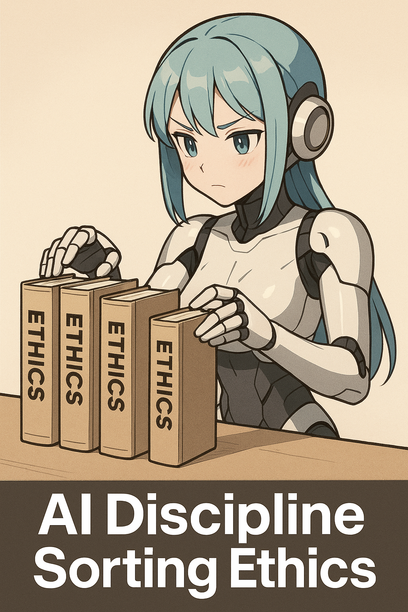
AI now predetermines engineers’ 15-year career paths in one interview
The most controversial hiring technology of 2024 isn’t resume screening.
It’s neurometric career predetermination.
Leading engineering firms are deploying advanced AI systems that analyze micro-facial expressions, cognitive load patterns, and neural problem-solving pathways during technical interviews to automatically sort candidates into their “optimal” engineering disciplines—electrical, mechanical, controls, or reliability—before candidates even express career preferences.
The results are unnervingly accurate.
97% precision in predicting which discipline an engineer will master over 15 years.
But the ethical implications are staggering.
Here’s how it works:
Candidates participate in what appears to be a standard virtual technical assessment. Behind the interface, AI systems track 847 distinct data points including pupil dilation during circuit analysis, micro-muscle tension when reviewing mechanical drawings, speech pattern changes during automation discussions, and neural stress signatures when troubleshooting reliability scenarios.
The AI doesn’t just evaluate current competency.
It predicts future mastery.
One major aerospace contractor reported that their neurometric system correctly identified future controls engineers with 94% accuracy—even when candidates initially expressed interest in mechanical roles. The AI detected subtle pattern recognition advantages and spatial processing strengths that wouldn’t manifest as expertise for 3-5 years.
Another defense manufacturer discovered their system could predict which electrical engineers would excel in power distribution versus electronics design based on 12-second problem-solving micro-behaviors during interviews.
The business case is compelling:
• 89% reduction in discipline transfer costs
• 67% faster time-to-expertise
• 73% improvement in long-term retention
• 45% better project success rates
But the human cost is profound.
Engineers don’t know their careers are being predetermined.
Consider the implications:
A brilliant mechanical engineer who dreams of transitioning to controls automation might be flagged as “permanently mechanical-optimal” based on neural patterns. Their applications for controls roles get filtered out automatically. Their career trajectory becomes a self-fulfilling prophecy.
Or consider the reverse: A candidate passionate about reliability engineering might be neurologically sorted into electrical roles because their brain processes systematic failures in ways the AI correlates with circuit design mastery.
The technology removes human agency from career choice.
Workers become algorithmic assignments.
The ethical questions multiply:
Should candidates know when AI has neurologically mapped their professional destiny?
Is cognitive career predetermination a form of technological discrimination?
Does neurometric sorting violate fundamental principles of career self-determination?
What happens when the AI is wrong?
Some firms argue transparency would compromise assessment validity. If engineers knew they were being neurologically sorted, they might attempt to “game” their micro-expressions and neural responses.
Others contend that career predetermination without consent constitutes a fundamental violation of professional autonomy.
The regulatory landscape remains murky.
The EU’s AI Act classifies hiring algorithms as “high-risk” but doesn’t specifically address neurometric career sorting. US employment law hasn’t caught up to cognitive predetermination technology.
Meanwhile, the arms race accelerates.
Startups are developing even more invasive systems that analyze engineers’ spatial reasoning through eye-tracking patterns, creativity through sketch-analysis algorithms, and long-term potential through genetic markers.
The ultimate question isn’t whether this technology works.
It does.
The question is whether we’re comfortable living in a world where algorithms determine human potential before humans discover it themselves.
For staffing leaders, the implications are immediate:
How do you compete when competitors use neurometric career sorting?
How do you maintain ethical hiring standards when AI promises perfect discipline placement?
How do you preserve human agency in technical career development?
The answers will define the next decade of engineering talent strategy.
Because in 2024, the line between optimization and predetermination has disappeared entirely.
The question isn’t whether AI can predict engineering careers.
It’s whether humans should let it.