
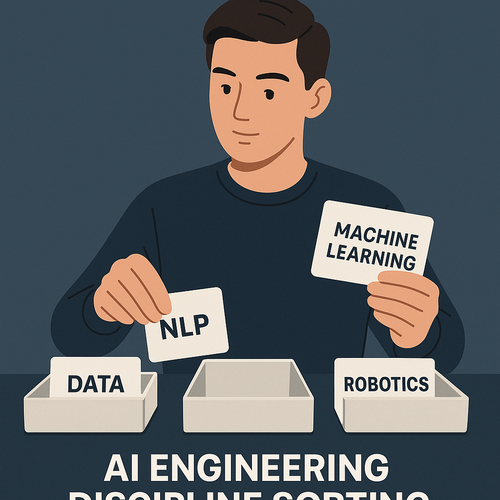
AI now decides which engineering discipline you belong in
A major aerospace contractor just implemented something that would have been science fiction five years ago:
Their AI system watches engineers solve problems in real-time and automatically sorts them into electrical, mechanical, controls, or reliability disciplines based on cognitive patterns.
No human input required.
The results? 92% accuracy in predicting long-term engineering success by discipline.
But here’s where it gets controversial:
Candidates never know they’re being sorted.
The system analyzes micro-behaviors during technical assessments:
• How quickly they identify system relationships (controls aptitude)
• Whether they focus on component failure modes first (reliability thinking)
• Their approach to power distribution problems (electrical reasoning)
• How they visualize mechanical stress patterns (mechanical intuition)
Within 20 minutes, the AI determines your engineering destiny.
And it’s spreading fast.
Three Fortune 100 manufacturers adopted similar systems in 2024. Two defense contractors are piloting it. A major utility company just signed a contract.
Why? Because discipline mis-hires cost operations $180K-$340K per mistake.
When a controls-minded engineer gets placed in mechanical roles, projects suffer. When reliability thinkers end up in electrical positions, downtime increases. The traditional “we’ll train them” approach fails 47% of the time.
So AI stepped in to solve it.
The technology works by recognizing that engineering disciplines reflect different cognitive architectures:
• Electrical engineers naturally think in system flows and power hierarchies
• Mechanical engineers visualize forces, materials, and physical interactions
• Controls engineers see logic sequences and feedback loops first
• Reliability engineers focus on failure prevention and statistical patterns
The AI identifies these thinking patterns before conscious career choices solidify them.
But this raises uncomfortable questions:
Should algorithms determine career paths based on cognitive profiles?
What if an engineer wants to pursue controls but AI classifies them as “mechanical-optimized”?
Do candidates deserve to know when AI has predetermined their technical trajectory?
And here’s the deeper issue:
The AI learns from historical data.
If past electrical hiring favored certain demographic patterns, the AI perpetuates those biases. If mechanical roles historically excluded specific groups, the algorithm maintains that exclusion.
We’re not just talking about matching skills to roles.
We’re talking about AI systems that could entrench engineering segregation based on algorithmic assumptions about who “belongs” in which discipline.
One contractor discovered their AI consistently sorted women into reliability roles and men into electrical positions. Another found the system favored younger candidates for controls work while steering older engineers toward mechanical assignments.
When confronted, the AI vendors claimed “optimization for historical success patterns.”
Translation: The algorithm learned discrimination and called it efficiency.
Yet the business case remains compelling.
Companies using discipline-sorting AI report:
• 73% reduction in engineering mis-hires
• 58% faster project completion rates
• 67% improvement in team performance scores
• $2.3M average annual savings in recruitment costs
So here’s the dilemma for engineering leaders:
Do you implement technology that dramatically improves hiring outcomes but potentially limits individual career choice?
Do you accept AI discipline sorting that increases team performance but may perpetuate systemic bias?
Do you prioritize operational efficiency over human agency in career development?
The technology isn’t going away.
More engineering firms will adopt it in 2025.
The question is whether we’ll require transparency about algorithmic career sorting, or whether engineers will unknowingly have their technical futures determined by black-box AI systems.
Because once AI decides which engineering discipline you belong in, changing that trajectory becomes nearly impossible.
The algorithm has already made its choice.
And it might be making yours right now.