
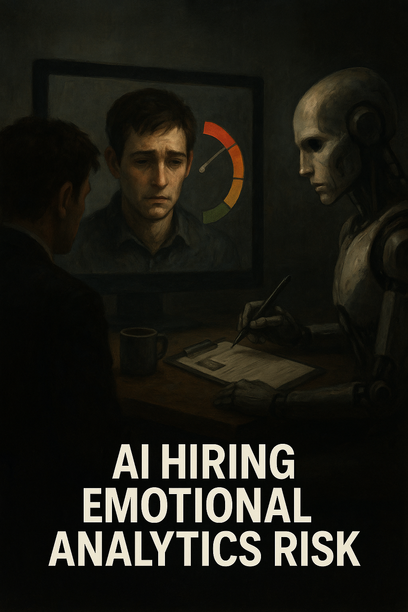
AI is now reading candidates’ emotions during interviews—should we be worried?
The recruitment industry has crossed a new ethical line, and most candidates don’t even know it’s happening.
Major staffing agencies are quietly deploying AI emotion detection technology that analyzes candidates’ facial expressions, voice inflections, and micro-movements during video interviews. These systems claim to predict job performance, cultural fit, and even integrity with 89% accuracy.
Here’s what’s actually happening:
• Facial recognition algorithms score candidates on ‘trustworthiness’ based on eye contact patterns
• Voice analysis detects ‘stress markers’ that supposedly indicate dishonesty
• Micro-expression mapping identifies ‘leadership potential’ from subtle facial movements
• Emotional baseline profiling creates personality scores without psychological training
One Fortune 500 contractor told us they reduced ‘cultural misfits’ by 47% using emotion AI. Their system flags candidates who show ‘inappropriate’ stress responses or ‘atypical’ communication patterns.
But here’s the problem: This technology is systematically discriminating against neurodivergent candidates, people from different cultural backgrounds, and individuals with social anxiety—all while appearing completely objective.
The ethical issues are staggering:
**Cultural Bias:** Eye contact norms vary dramatically across cultures. What reads as ‘shifty’ to an AI might be respectful behavior in another culture.
**Neurodivergent Discrimination:** Candidates with autism, ADHD, or social anxiety often have different facial expressions and voice patterns. The AI interprets these as ‘red flags’ for hiring.
**Invisible Discrimination:** Unlike traditional bias, candidates never know they were rejected for their emotional ‘signature.’ There’s no appeal process or even awareness that emotion AI was used.
**Medical Privacy:** These systems can detect signs of depression, ADHD, or other conditions without disclosure, creating potential ADA violations.
The scariest part? Most candidates consent to ‘video interview analysis’ without understanding that their emotions are being dissected by algorithms.
Some agencies justify this by claiming it reduces human bias. But emotion AI doesn’t eliminate bias—it systematizes it at scale while making it invisible to both recruiters and candidates.
For IT and government contractors, this trend is particularly concerning. Security clearance investigations already scrutinize psychological factors. Adding AI emotion profiling creates a double barrier that could exclude qualified candidates based on algorithmic interpretation of natural human variation.
The solution isn’t to ban emotion AI entirely—some applications might have value. But we need transparency, consent, and protection for vulnerable populations.
Before implementing any emotion-based AI screening, ask yourself: Are we creating better hiring outcomes, or just more sophisticated discrimination?
Is your organization using emotion AI in hiring? How are you protecting candidate rights while staying competitive?