
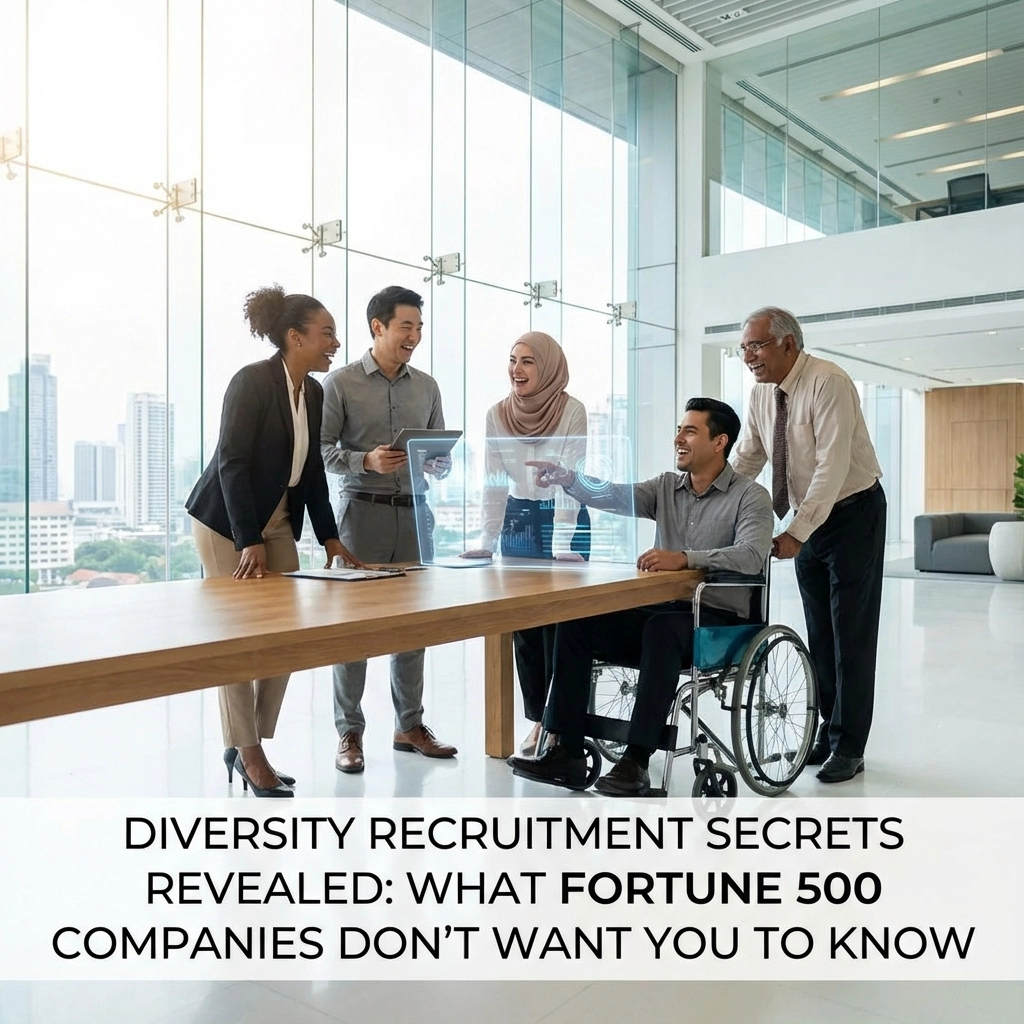
Here's the thing about "secrets" in diversity recruitment: Fortune 500 companies aren't actually keeping them secret. They're publishing detailed DEI reports, sharing case studies, and investing millions in research. The real issue? Most companies aren't implementing these proven strategies.
While 88% of Fortune 500 companies have public diversity commitments, the gap between intention and execution remains massive. The companies that crack this code aren't using mysterious tactics: they're applying research-backed approaches with precision and consistency.
So what exactly are these "secrets" that separate diversity recruitment leaders from the pack?
The Signal Effect: One Change That Doubles Minority Interest

The most powerful finding in recent diversity recruitment research comes from a Fortune 500 financial services experiment. When job postings explicitly signaled interest in employee diversity, interest from underrepresented candidates more than doubled.
But here's where it gets interesting: the effect was even stronger when the CEO personally endorsed diversity in the posting. A simple quote from leadership about valuing diverse perspectives created a measurable surge in qualified minority applications.
This isn't about empty corporate speak. It's about authentic communication that candidates from underrepresented groups recognize as genuine commitment. The companies getting this right understand that diverse talent actively seeks signals of inclusion before investing time in applications.
The lesson? Your job postings are diversity recruitment tools, not just role descriptions. Every posting either attracts or repels diverse talent based on the signals it sends.
Beyond Job Boards: Where Fortune 500s Actually Find Talent
Traditional job boards represent just the tip of the talent iceberg. Fortune 500 diversity recruitment leaders go where diverse talent already congregates, rather than waiting for talent to find them.
Strategic Community Presence
- Partnerships with organizations like Inroads, which connects underserved youth to Fortune 500 internships
- Active participation in specialized networks like Female Executive Search and Out & Equal for LGBTQ+ leadership talent
- Sponsorship of technical conferences focused on women, veterans, and minorities in STEM fields
Military Veteran Recruitment
Leading companies maintain dedicated veteran career opportunities programs, recognizing that military experience translates into valuable leadership and technical skills. They partner with veteran service organizations and attend military job fairs with specific roles in mind, not generic "we're hiring" messaging.

University Partnership Evolution
Rather than recruiting exclusively from elite universities, diversity leaders expand their campus presence to historically black colleges and universities (HBCUs), Hispanic-serving institutions (HSIs), and community colleges with strong technical programs.
The pattern is clear: intentional outreach to specific communities yields better diverse talent than passive posting and hoping.
Data-Driven Hiring Removes Unconscious Bias
Fortune 500 companies treat diversity recruitment like any other business metric: with rigorous measurement and continuous optimization. They track:
- Time-to-hire by demographic groups to identify process bottlenecks
- Interview-to-offer ratios across different candidate backgrounds
- Source effectiveness for diverse talent acquisition
- Retention rates by hiring channel to measure long-term success
This data-driven approach reveals bias points that subjective evaluation misses. For example, if diverse candidates consistently advance through technical screens but stall at culture fit interviews, that signals potential interviewer bias rather than candidate qualification issues.
Structured Interview Implementation
The most successful companies standardize their interview processes with:
- Consistent question sets across all candidates
- Multiple interviewer perspectives for each role
- Scoring rubrics that focus on job-relevant competencies
- Regular interviewer bias training and calibration sessions
Skills-Based Hiring Opens Talent Floodgates

Here's a radical concept that Fortune 500 diversity leaders have embraced: hire for what people can do, not where they went to school.
Skills-based hiring particularly benefits underrepresented groups who may have taken non-traditional paths to expertise. This includes:
- Bootcamp graduates with hands-on coding experience
- Military veterans transitioning technical skills to civilian roles
- Career changers who developed relevant capabilities through entrepreneurship or side projects
- International talent with strong technical skills but non-traditional educational credentials
Companies leading in this space create skills assessments that directly correlate with job performance. They've discovered that diverse candidates often outperform traditional hires when evaluation focuses on actual capability rather than pedigree.
For information technology jobs, engineering positions, and finance roles, this approach consistently identifies high-performing diverse talent that resume screening might overlook.
Employee Resource Groups: The Retention Secret Weapon
Recruitment is only half the diversity equation. The Fortune 500 companies with the strongest diversity metrics understand that attraction without retention creates expensive revolving doors.
ERG Impact Data
- 90% of Fortune 500 companies operate Employee Resource Groups
- ERG members show 40% higher retention rates
- Internal referrals from ERG networks have 50% faster time-to-hire
- ERG-sponsored candidates demonstrate better cultural fit and performance metrics

Beyond Social Networking
Effective ERGs function as talent development engines, providing:
- Mentorship matching between senior leaders and emerging diverse talent
- Professional development programming tailored to specific group challenges
- Internal mobility pathways that keep diverse talent within the organization
- Feedback channels that help companies identify and address inclusion barriers
The retention impact is measurable: companies with active ERGs see significantly lower turnover among underrepresented employees, making their recruitment investments more profitable.
Leadership Accountability: Making Diversity a Business Metric
The companies with the strongest diversity recruitment results treat it like any other business priority: with executive accountability, clear metrics, and financial consequences.
Executive Compensation Tied to Diversity Metrics
Progressive Fortune 500 companies now include diversity hiring and retention metrics in executive bonus calculations. When leadership compensation depends on diverse talent outcomes, resources and attention follow.
Regular Progress Reporting
Rather than annual diversity reports, leading companies track monthly hiring metrics by demographic group, identifying problems early enough to correct course during the same fiscal year.
The Partnership Advantage: Why Specialized Staffing Matters

Even Fortune 500 companies with massive internal recruiting teams recognize the value of specialized staffing partners for diversity recruitment. The reason is simple: access to talent networks that internal recruiters can't efficiently build.
At AList Professionals, our focus on veteran career opportunities and diverse technical talent means we maintain relationships in communities where Fortune 500 companies want to recruit but lack consistent presence.
The Specialized Network Effect
- Deep relationships with military transition programs
- Connections to coding bootcamps and alternative education programs
- Partnerships with minority professional associations
- Track record with diverse candidates who trust our commitment to inclusive placement
For companies serious about diversity recruitment, the question isn't whether to work with specialized staffing firms, but which firms have the authentic community connections that yield results.
Implementation Reality: From Secrets to Systems
These Fortune 500 "secrets" work because they're implemented systematically, not sporadically. The companies seeing measurable diversity recruitment improvements:
- Start with explicit commitment signaling in all job postings and recruiting materials
- Expand sourcing beyond traditional channels to include community partnerships and alternative education programs
- Implement data tracking for all diversity recruitment metrics from initial application through 12-month retention
- Train interviewers on structured, bias-reducing interview techniques
- Create ERG programs that support retention and internal referrals
- Hold leadership accountable with diversity metrics tied to performance evaluations
The "secret" sauce isn't mysterious: it's consistent execution of research-backed strategies that most companies talk about but few implement comprehensively.
Your Next Steps
Ready to implement Fortune 500-level diversity recruitment strategies? Whether you need help accessing diverse talent networks, implementing skills-based hiring processes, or developing veteran recruitment programs, contact AList Professionals to discuss how we can support your diversity hiring goals.
The secrets are out. The question is: will you implement them?