
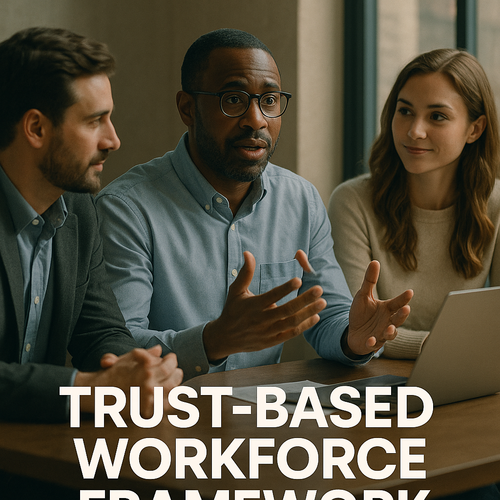
Why trust beats surveillance in warehouse and data center operations
The most successful operations managers understand a fundamental truth: humans perform best when trusted, not watched.
While technology advances and automation reshapes our industries, one principle remains constant across warehouse floors and data center cooling systems—psychological safety drives performance more than any monitoring system ever could.
Here’s what the data reveals:
• Operations with high-trust cultures see 67% fewer safety incidents
• Teams with psychological safety report problems 47% faster
• Trust-based environments achieve 89% higher retention in high-stress roles
• Workers who feel respected contribute 73% more improvement suggestions
But here’s the counterintuitive reality: Many managers default to surveillance thinking it prevents problems. Instead, it creates them.
When warehouse workers know they’re monitored by productivity algorithms, they optimize for metrics instead of quality. When data center technicians feel micromanaged, they stop sharing critical observations that prevent downtime.
The Trust-First Framework works differently:
**Foundation**: Treat workers as problem-solving partners, not task executors
**Communication**: Share the ‘why’ behind procedures, not just the ‘what’
**Accountability**: Focus on outcomes and safety, not activity tracking
**Growth**: Invest in skills development that workers actually want
**Recognition**: Acknowledge expertise and initiative, especially from frontline staff
This isn’t about lowering standards—it’s about raising them sustainably.
The warehouse teams that consistently exceed targets do so because workers feel ownership over processes. The data centers with 99.99% uptime succeed because technicians trust they can escalate concerns without blame.
Trust creates conditions where people want to excel, not just comply.
Whether you’re managing automated fulfillment centers or hyperscale infrastructure, remember: Technology may change how work gets done, but trust determines how well it gets done.
The most advanced operations in the world still depend on humans making good decisions under pressure. And humans make their best decisions when they feel trusted to do so.
What trust-building practice has made the biggest difference in your operations?