
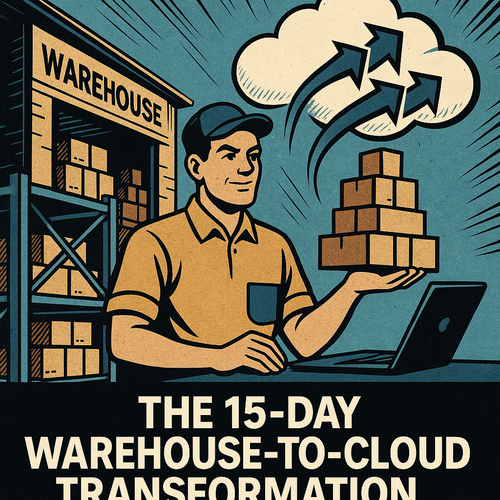
How 200 warehouse workers became cloud engineers in 15 days
Sometimes the most desperate situations create the most innovative solutions.
Midwest Logistics was facing complete warehouse closure. E-commerce shifts had eliminated 80% of their traditional fulfillment contracts. 200 workers were about to lose their jobs.
But their CEO noticed something interesting in the closure notices from major tech companies: massive demand for data center operations staff. Physical infrastructure expertise. 24/7 operational mindset. Mechanical troubleshooting skills.
Sound familiar?
Instead of laying off their workforce, they partnered with three hyperscale cloud providers to create the most ambitious workforce transformation in logistics history.
**The 15-Day Transformation Framework:**
Day 1-3: Skills mapping sessions revealed 78% direct skill overlap between warehouse automation and data center operations
Day 4-8: Intensive cloud infrastructure bootcamp covering cooling systems, power distribution, and server rack management
Day 9-12: Hands-on certification labs with actual data center equipment
Day 13-15: Direct placement into cloud facilities with guaranteed employment
**The results were extraordinary:**
• 197 of 200 workers successfully transitioned to cloud infrastructure roles
• Average salary increase: 67% above previous warehouse wages
• 6-month retention rate: 94%
• Total transformation cost: $340K
• Estimated layoff/unemployment costs avoided: $2.8M
But here’s the real breakthrough: Those warehouse workers weren’t starting from zero.
They already knew:
→ How to troubleshoot automated systems under pressure
→ How to work in temperature-controlled environments
→ How to maintain 99.9% uptime in mission-critical operations
→ How to follow precise safety protocols
→ How to work rotating 24/7 schedules
They just needed to apply those skills to servers instead of conveyor belts.
Three years later, Midwest Logistics has become the premier cloud infrastructure staffing partner for the entire region. They’ve placed over 1,000 transformed workers into high-paying tech roles.
**The lesson for staffing leaders:**
Don’t look at workforce disruption as a crisis—look at it as a talent transformation opportunity.
The skills your candidates have developed in traditional industries often translate directly to emerging high-demand sectors. You just need the vision to see the connections and the framework to make the transition happen.
Warehouse automation workers can become data center operators. Manufacturing technicians can become renewable energy specialists. Traditional IT workers can become AI infrastructure experts.
The talent pipeline isn’t broken—it just needs strategic redirection.
Which of your client industries could benefit from systematic workforce transformation instead of traditional hiring? The opportunities are everywhere if you know how to look.