
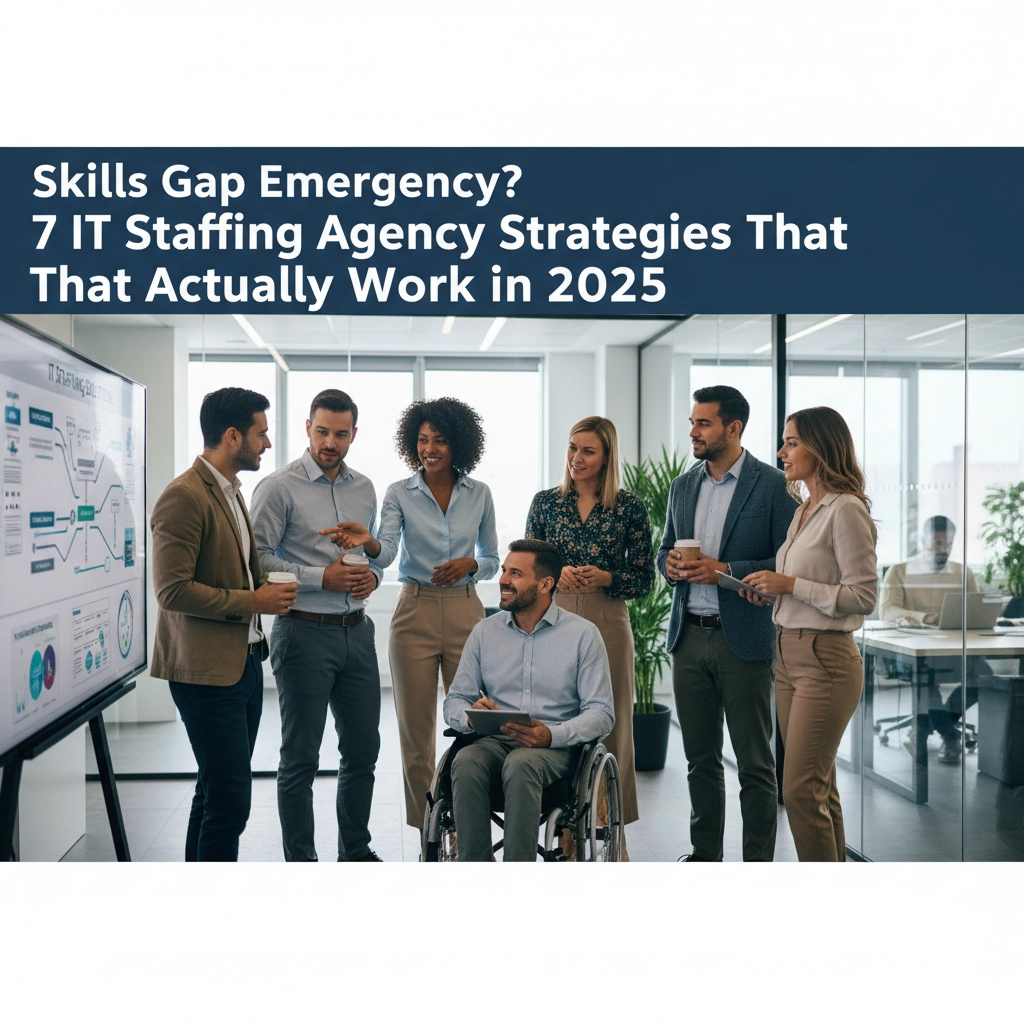
The IT skills gap hit crisis levels in 2025. With 64% of executives planning to increase IT budgets and 43% expanding their tech teams, finding qualified talent isn't just hard: it's make-or-break for most companies.
Here's the reality: traditional recruiting methods aren't cutting it anymore. But smart IT staffing agencies have cracked the code with data-driven strategies that actually work. Let's dive into the seven approaches that are closing skills gaps right now.
1. AI-Powered Talent Sourcing That Actually Delivers
Forget the old keyword-matching resume scanners. Today's AI sourcing tools analyze GitHub contributions, Stack Overflow activity, and project portfolios to find candidates with real skills.
The numbers speak volumes: companies using AI-driven recruitment see 40% faster time-to-hire and 25% better candidate quality scores. At AList Professionals, we're seeing similar results with our AI-powered matching framework that goes beyond resumes to assess actual technical capabilities.

Here's what works: AI tools like HireVue and Pymetrics analyze coding samples, problem-solving approaches, and even communication patterns to predict job performance. Instead of filtering out great candidates because they lack a computer science degree, these systems identify talent based on what they can actually do.
Action step: Start tracking metrics like source-to-hire conversion rates and first-year retention by sourcing method. The data will show you which AI tools deliver real results versus expensive hype.
2. Strategic Upskilling Programs That Create Talent
Rather than competing for the same small pool of senior developers, forward-thinking agencies are creating their own talent through targeted upskilling programs.
The ROI is impressive: companies investing in upskilling see 218% higher revenue per employee and 24% higher profit margins. But here's the key: it has to be strategic, not random.
AList's 3-Phase Upskilling Framework focuses on three core areas:
- Phase 1: Assess current skills gaps using real project data
- Phase 2: Deploy micro-learning modules for specific technologies (AWS, Docker, React)
- Phase 3: Validate skills through actual project work, not just certifications
What's working: Partnerships with platforms like Pluralsight and Coursera, combined with hands-on project assignments. Companies are seeing 60% of upskilled contractors transition to full-time roles within 18 months.
3. Diversity and Veteran Recruitment That Expands Your Talent Pool
The tech industry's diversity problem is also its biggest opportunity. Women make up just 28% of the tech workforce, and veterans represent only 3%: but both groups offer untapped expertise.

Diversity recruitment services aren't just about compliance anymore. They're about accessing talent pools your competitors are ignoring. Organizations with diverse teams are 35% more likely to outperform their peers financially.
AList's approach focuses on:
- Partnering with women's coding bootcamps like Grace Hopper Academy
- Connecting with veteran transition programs like VET TEC
- Building relationships with HBCUs and Hispanic-serving institutions
Real results: One client filled 40% of their cybersecurity roles through veteran recruitment, cutting average hiring time from 90 to 45 days. Veterans bring discipline, security clearances, and proven problem-solving skills that translate perfectly to IT environments.
4. Coding Bootcamp Partnerships That Pipeline Fresh Talent
Universities aren't keeping up with industry needs, but coding bootcamps are. Smart agencies are building direct pipelines with programs that teach current, job-ready skills.
The data backs this up: bootcamp grads have 79% job placement rates within six months, and their starting salaries average $70,000. More importantly, they're trained on the exact technologies companies need right now.
Winning partnerships include:
- General Assembly (full-stack development)
- Lambda School (remote-first training)
- Flatiron School (data science focus)
- The Odin Project (open-source curriculum)
AList has placement agreements with 12 bootcamps nationwide, giving us first access to graduates who've completed real-world projects. We're seeing these candidates outperform traditional CS grads in practical assessments 65% of the time.
5. Contract Staffing Services That Provide Immediate Relief
When you need skills now, contract staffing services deliver faster than any other solution. The average permanent hire takes 42 days. Contract placements? 7-10 days.

But speed isn't the only advantage. Contract staffing lets companies:
- Test talent before committing to permanent hires
- Scale teams quickly for project sprints
- Access specialized skills without long-term overhead
- Fill gaps while building internal capabilities
The financial impact is significant: companies using strategic contract staffing reduce hiring costs by 30% and project delivery times by 25%.
AList's contract-to-perm conversion rate: 47% of our contract placements become permanent hires within 12 months, giving clients a risk-free way to build their core teams.
6. Remote Talent Pools That Break Geographic Limits
Geography used to limit talent access. Not anymore. Remote work opened access to global talent pools, and smart agencies are capitalizing on this shift.
The numbers are compelling: remote job postings increased 457% since 2020, and companies hiring remotely access talent pools 10x larger than local-only searches.
Key strategies:
- Building relationships with remote-first developers in tech hubs like Austin, Denver, and Portland
- Partnering with international talent platforms for specialized skills
- Developing remote onboarding processes that integrate contractors seamlessly
At AList, 68% of our IT placements are now fully remote, letting clients access top-tier talent regardless of location. We're seeing particularly strong results in:
- Frontend developers from Eastern Europe
- DevOps engineers from Latin America
- Data scientists from Asia-Pacific regions
7. Outcome-Based Recruiting That Guarantees Results
Traditional recruiting charges fees whether placements work out or not. Outcome-based recruiting flips this model, aligning agency success with client results.
Performance metrics that matter:
- 90-day retention rates (industry average: 68%, top agencies: 85%+)
- Time-to-productivity (how quickly new hires contribute)
- Project completion success rates
- Client satisfaction scores
AList's ROI-driven talent framework tracks these metrics obsessively. We guarantee 85% retention at 90 days or we find a replacement at no charge.
This approach forces agencies to focus on quality over quantity, cultural fit over just technical skills, and long-term success over quick placements.
Making It Work: Implementation Strategy
Here's how to implement these strategies effectively:
Week 1-2: Audit your current hiring metrics and identify the biggest bottlenecks
Week 3-4: Select 2-3 strategies that align with your immediate needs
Week 5-8: Pilot programs with measurable success criteria
Week 9-12: Scale what works, eliminate what doesn't
The key is starting with data, not assumptions. Track everything: source quality, time-to-hire, retention rates, and client satisfaction. The agencies winning in 2025 are the ones treating talent acquisition as a science, not an art.
Ready to close your skills gap? The strategies are proven. The tools are available. The question isn't whether you can solve your IT staffing challenges: it's how quickly you'll implement the solutions that are already working for your competitors.
Looking to transform your IT staffing approach? Connect with AList Professionals to see how these strategies can work for your organization.