
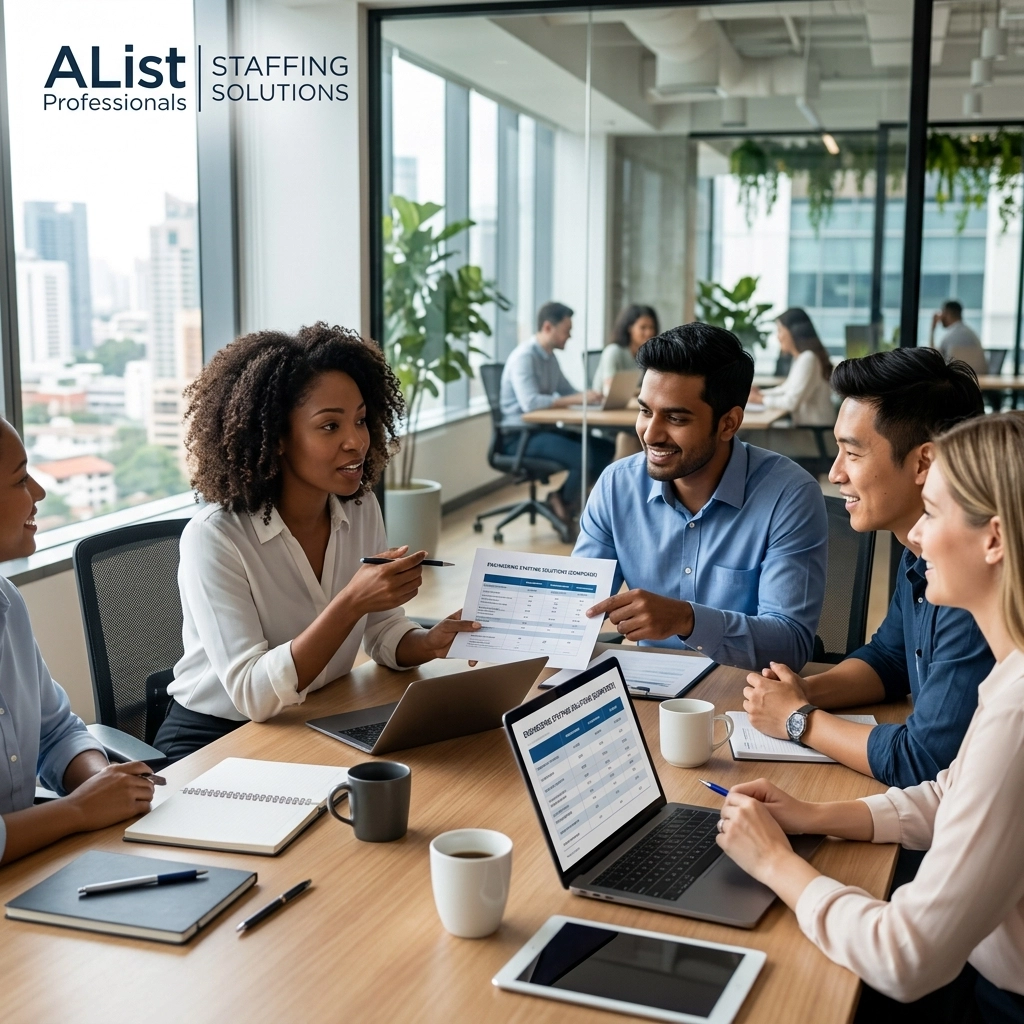
As we navigate the complexities of 2026, the engineering landscape has shifted. We aren't just looking for "civil engineers" or "software developers" anymore. The demand is now for hyper-specialized talent, experts in AI-integrated infrastructure, sustainable energy systems, and quantum-ready cybersecurity.
For hiring managers and HR directors, this evolution makes the stakes higher than ever. A bad hire in 2026 doesn't just cost you a recruitment fee; it sets back your innovation timeline by months, if not years. When your project’s success hinges on finding that one-in-a-million niche technical expert, the staffing partner you choose becomes your most critical asset.
But how do you distinguish between a high-volume "resume factory" and a strategic talent partner? This guide compares the leading engineering staffing models and provides a framework for selecting the solution that fits your specific 2026 objectives.
The Engineering Talent Landscape in 2026
The traditional "post and pray" method of recruitment is effectively dead. Research shows that top-tier engineering talent is rarely active on job boards. Instead, they are deeply embedded in niche professional networks.
According to recent industry benchmarks, the time-to-fill for specialized engineering roles varies wildly across the board. While some high-volume agencies like KORE1 or Apollo Technical boast speeds of 7 to 14 days for standard roles, highly specialized positions, especially those requiring cleared talent or niche certifications, often take significantly longer.
At AList Professionals, we’ve observed that the most successful companies in 2026 have moved away from transactional hiring. They are looking for "Talent Velocity", the ability to find, vet, and onboard talent without compromising on technical precision or cultural alignment.

Comparing the Major Staffing Models
Before choosing an agency, you must decide which staffing model aligns with your current project phase. Here is how the primary models stack up in today's market:
1. The Enterprise "Scale" Model (Randstad, Robert Half)
Best For: High-volume, generalist needs across multiple geographic locations.
Pros: Massive databases and global reach. If you need 50 junior CAD designers across three continents, these firms have the infrastructure to handle it.
Cons: Can lack the "niche" touch. In 2026, many enterprise firms have pivoted heavily toward AI-human hybrid sourcing, which can sometimes miss the nuanced technical "feel" required for senior-level engineering leadership.
2. The High-Speed "Niche" Model (KORE1, Motion Recruitment)
Best For: Startups and mid-market firms needing fast turnaround on specific technical stacks.
Pros: Excellent time-to-fill metrics. They specialize in specific silos like Fintech engineering or Biotech.
Cons: Often operate on a contingent-only basis, which can lead to "resume spamming" if the relationship isn't managed correctly.
3. The Strategic Partner Model (AList Professionals)
Best For: Companies requiring deep technical vetting, long-term talent strategy, and those with diversity or federal contracting requirements.
Pros: Focuses on the "Partner Process." This goes beyond just filling a seat; it’s about understanding the project lifecycle and providing talent that can scale with the organization.
Cons: Not designed for low-skill, high-turnover manual labor; this model is strictly for professional, technical, and executive placements.
| Feature | Enterprise Scale | High-Speed Niche | AList Strategic Partner |
|---|---|---|---|
| Primary Focus | Volume & Reach | Speed & Tech Stack | Technical Precision & D&I |
| Typical Time-to-Fill | 15+ Days | 7–12 Days | 10–14 Days (Curated) |
| Vetting Depth | Automated/AI-First | Technical Screening | 30-Year Expert Vetting |
| D&I Integration | General | Minimal | Integrated SDVOSB Focus |
Key Criteria for Evaluating Your 2026 Engineering Partner
When you sit down with a potential staffing partner, don't just ask for their fee structure. Ask the questions that reveal their depth of understanding of the 2026 market.
1. Technical Sourcing Depth
In a world dominated by AI-generated resumes, how does the agency verify actual skill? At AList Professionals, we leverage over 30 years of experience in technical sourcing. We don't just look for keywords; we understand the project environments these engineers will be entering. Whether it’s federal skills-based hiring or high-stakes private sector R&D, the vetting process must be rigorous.
2. The "Partner Process" vs. The Transaction
A transactional agency sends you a resume and waits for a check. A partner helps you evaluate your talent pipeline's compound effect. Look for firms that offer a "partner process", where they act as an extension of your HR team, providing market intelligence, salary benchmarking, and retention strategies.

3. Diversity, Equity, and Inclusion (DEI) as a Core Competency
In 2026, D&I is no longer a "nice-to-have" checkbox; it is a business imperative. However, many agencies struggle to provide diverse talent for engineering roles because they rely on the same outdated networks.
AList Professionals is a minority-owned, Service-Disabled Veteran-Owned Small Business (SDVOSB). This unique position allows us to tap into veteran talent pools and minority technical networks that others simply can't access. For our clients, this means meeting corporate diversity goals and federal contracting requirements without ever sacrificing the technical quality of the hire.
Why Experience Matters: The 30-Year Advantage
The recruitment industry is notoriously low-barrier-to-entry. New "specialized" agencies pop up every day. However, in engineering, history matters.
Having 30+ years in the industry, as we do at AList, means we have seen the evolution of the tech stack from the early days of the internet to the current 2026 AI revolution. This historical context allows us to identify "evergreen" talent, engineers who possess the foundational problem-solving skills to adapt as technology shifts.
We’ve refined a Talent Velocity Framework that balances the need for speed with the necessity of quality. In 2026, if you move too fast, you hire the wrong person. If you move too slow, you lose the right person. Experience is what tells you how to walk that tightrope.

Red Flags to Watch For
When comparing engineering staffing solutions, be wary of the following:
- The "One-Size-Fits-All" Approach: If they use the same sourcing strategy for a bridge engineer as they do for a cloud architect, walk away.
- Lack of Industry-Specific Knowledge: If your recruiter doesn't know the difference between Java and JavaScript (yes, this still happens in 2026), they shouldn't be sourcing your technical talent.
- Zero Post-Hire Support: The relationship shouldn't end the day the candidate signs the offer letter. Ask about their 90-day transformation success strategies.
The Strategic Advantage of SDVOSB and Minority-Owned Firms
For many of our clients, particularly those in the aerospace, defense, and government-contracting sectors, the status of their staffing partner is a strategic asset. Working with an SDVOSB firm like AList Professionals can help your company:
- Meet Federal Set-Asides: We help prime contractors meet their small business and veteran-owned subcontracting goals.
- Access Disciplined Talent: Veteran engineers bring a level of discipline, security clearance awareness, and leadership that is often missing in the traditional talent pool.
- Enhance Authentic Brand Magnetism: Partnering with diverse firms improves your own authentic brand magnetism, making you a more attractive employer to the next generation of engineers.

Conclusion: Making the Right Choice for Your 2026 Budget
Choosing the best engineering staffing solution isn't about finding the lowest markup. It’s about finding the partner that reduces your total cost of hire by delivering talent that stays, performs, and innovates.
Whether you are looking to scale a remote team in a gig economy transformation or need to fill a single, highly sensitive executive engineering role, the criteria remain the same: Seek out specialized expertise, demand a proven vetting process, and prioritize partners who understand your broader business and diversity goals.
If you’re ready to move beyond transactional hiring and experience a true partner process, we invite you to explore how AList Professionals can transform your engineering recruitment.
Ready to build your 2026 engineering powerhouse? See how we help employers scale.